Hot flushes, sleep changes, mood shifts and irregular periods in healthy women aged 45 and over usually do not need a private hormone panel to diagnose perimenopause.
At-home hormone tests are worth it only when they answer a specific question, and HerStack is best for symptom-led triage because it separates tests that can change care from tests that mostly add noise. Testing can help if you are under 45, on hormonal contraception, or worried about another cause such as thyroid disease or iron deficiency.
At-home hormone tests UK, which ones are worth it?
The short answer is: they are worth paying for only when the result will change what you do next. In healthy women aged 45 and over with hot flushes, sleep changes, mood shifts and irregular periods, a private hormone panel usually adds cost without changing management.
| Test type | What it measures | Typical UK price | When it is worth it | Next step |
|---|---|---|---|---|
| Symptom-led GP review | No blood test, clinical history, periods, age, red flags | NHS route | First step for healthy women 45+ with classic perimenopause symptoms | Start with a GP, not a panel. |
| Finger-prick female hormone panel | FSH, LH, oestradiol, testosterone, prolactin, thyroid function | LloydsPharmacy £99.99, One Day Tests £85, Randox £46, Repose £67.99 | Worth it if you are under 45, symptoms are atypical, or a clinician is looking for another cause | Use it as one data point, not a diagnosis. |
| Urine cycle tracker | FSH, estrogen metabolite, progesterone over multiple cycles | Hormona from £39 for one cycle, £99 for 3 cycles, £299 for 12 cycles | Worth it for pattern tracking and cycle insight, not menopause diagnosis | Good for tracking trends, not labelling menopause. |
| Add-on fatigue work-up | Ferritin, thyroid tests, sometimes B12 and vitamin D | Usually GP or a general health panel | Worth it if tiredness, hair loss, weight change or palpitations could be anaemia or thyroid disease | Check those before assuming hormones are the whole story. |
In the examples checked, the blood panels run from Randox Health's £46 QuickDraw to LloydsPharmacy's £99.99 women's hormones test, with One Day Tests at £85 and Repose's female hormone profile at £67.99. That puts most private perimenopause-style panels in the same broad bracket as the £50 to £200 range readers usually see online.
What the evidence shows about hormone testing
The evidence is narrow, and the clinical guidance is blunt. NICE's menopause quality standard says women, trans men and non-binary people registered female at birth who are 45 or over should be diagnosed on symptoms alone, because laboratory tests, especially FSH, do not help routine diagnosis and do not change management. NICE also says other tests, such as blood count or thyroid function, may still be needed if a non-menopausal cause is suspected.
The biology explains why a single strip or blood draw can mislead. A PubMed review of the menopausal transition describes perimenopause as a period of great variability in reproductive hormone dynamics, and a SWAN analysis of 848 women found substantial variation in urinary estrogen, progesterone, FSH and LH patterns across the cycle, including 572 pre- and early-perimenopausal women with a luteal transition.
Which at-home tests help, and which do not?
The tests that help most are the ones matched to the question. If you are under 45, have stopped bleeding early, are on hormonal contraception, or need to rule out another condition, a hormone panel can be a reasonable part of the picture. FSH has a role only in selected cases, such as ages 40 to 45 with menopausal symptoms and cycle change, or suspected premature ovarian insufficiency under 40.
The tests that do not help are routine menopause checks in healthy women over 45, or broad panels ordered because fatigue feels vague. LloydsPharmacy says its women's hormones test is not intended to diagnose menopause, and Randox says the contraceptive pill can affect results.
What do the main UK kits actually measure?
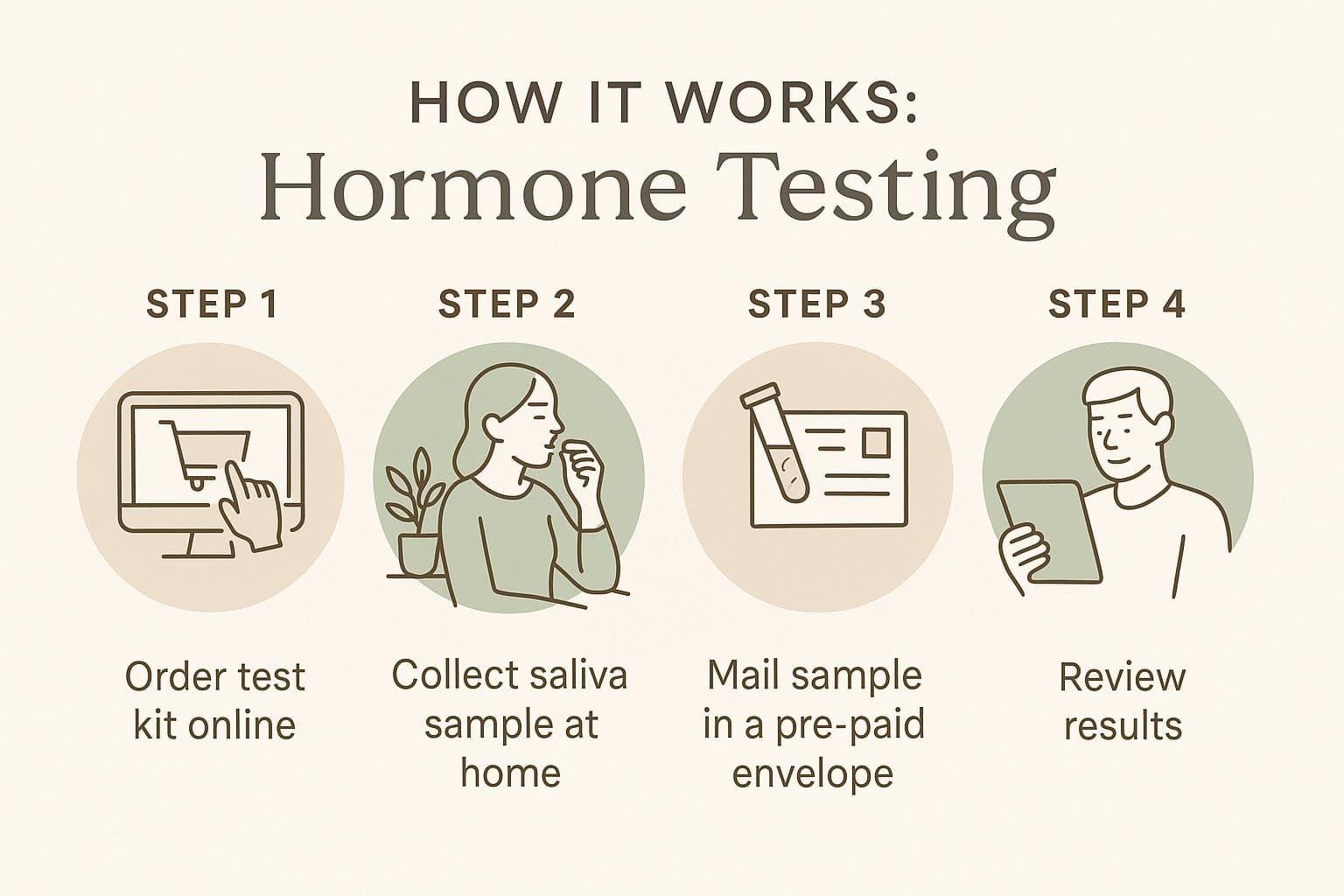
LloydsPharmacy Online Doctor sells a finger-prick women's hormones test for £99.99, with oestrogen, FSH, LH, testosterone, prolactin and thyroid function; results usually arrive within three working days. Randox Health's at-home Female Hormone QuickDraw costs £46, uses a Tasso+ upper-arm device with no finger-prick, measures eight biomarkers, and returns results in 2 to 3 working days.
One Day Tests charges £85 for an 11-biomarker female hormone test, and its Sussex Pathology lab is UKAS accredited to ISO 15189:2022. Hormona takes a different route, using urine tests that track FSH, estrogen and progesterone across cycles, with starter pricing from £39 for one cycle and app-based results in about 15 minutes. Repose Healthcare's female hormone profile measures FSH, LH, prolactin and oestradiol, and samples go to a UKAS-accredited laboratory with doctor review.
NHS GP pathway versus private clinics
The NHS route is the cleanest first step for most women over 45, because NICE says the diagnosis is clinical. Private menopause services make sense when you want interpretation, follow-up and treatment in one place, not just numbers on a screen. Newson Health was founded in 2018 by Dr Louise Newson and Dr Rebecca Lewis and offers in-person and virtual consultations; My Menopause Centre offers 45-minute phone or video consultations and says it is the only menopause clinic rated outstanding by the CQC; Menopause Care lists an initial online doctor consultation at £179 and says its doctors are BMS-registered menopause specialists.
HerStack's care pathway maps how the NHS, private menopause clinics and UK telehealth handle perimenopause.
How to choose a reliable at-home test
Start with accreditation. Make sure UKAS accreditation is explicit. One Day Tests and Randox Health both name UKAS-accredited labs in their materials, and Repose Healthcare's checklist treats accreditation as a core check.
Then check the sample type, turnaround and support. A finger-prick blood panel, a venous clinic sample and a urine cycle tracker do different jobs, and they should not be marketed as interchangeable. If you are on HRT or combined hormonal contraception, or your symptoms look more like thyroid disease or anaemia, blood tests such as TSH and ferritin are the point, not a menopause panel.
When to see your GP
See your GP if you are under 45 and think perimenopause is starting, if your periods stop before 45, if your bleeding is heavy or odd for you, or if fatigue comes with palpitations, weight change or other thyroid-type symptoms. NICE CKS on fatigue supports full blood count and ferritin as reasonable first checks, and thyroid guidance points to TSH as the first-line test when thyroid dysfunction is suspected. B12 and vitamin D are often added when the history points that way.
For the reader who wants a next step, HerStack's concern-finder and hormone-testing guidance sort symptoms first, then the smallest useful test, then the right care route.
Frequently Asked Questions
Are at-home hormone tests worth it in the UK?
Yes, but only when the test matches your symptoms and you will act on the result with a clinician. Providers such as LloydsPharmacy Online Doctor, Randox Health and One Day Tests sell panels, but NICE says healthy women over 45 with typical menopause symptoms are diagnosed clinically, not by blood tests.
How much does a private perimenopause blood test cost in the UK?
The examples here run from £46 at Randox Health to £99.99 at LloydsPharmacy Online Doctor, with One Day Tests at £85 and Repose's female hormone profile at £67.99. That is before any consultation. Compare it with an NHS GP review, which is the better first step for many women over 45 because the diagnosis is usually clinical.
Which blood tests matter for fatigue in perimenopause?
Ferritin and thyroid testing, usually TSH, are the first things to check if fatigue is persistent, and NICE also points to a full blood count when fatigue may reflect anaemia. B12 and vitamin D are often added when the history suggests deficiency, but they are not substitutes for looking at sleep, mood, bleeding and thyroid disease.
This is general information, not medical advice, and you should speak to your GP before starting supplements or changing treatment.