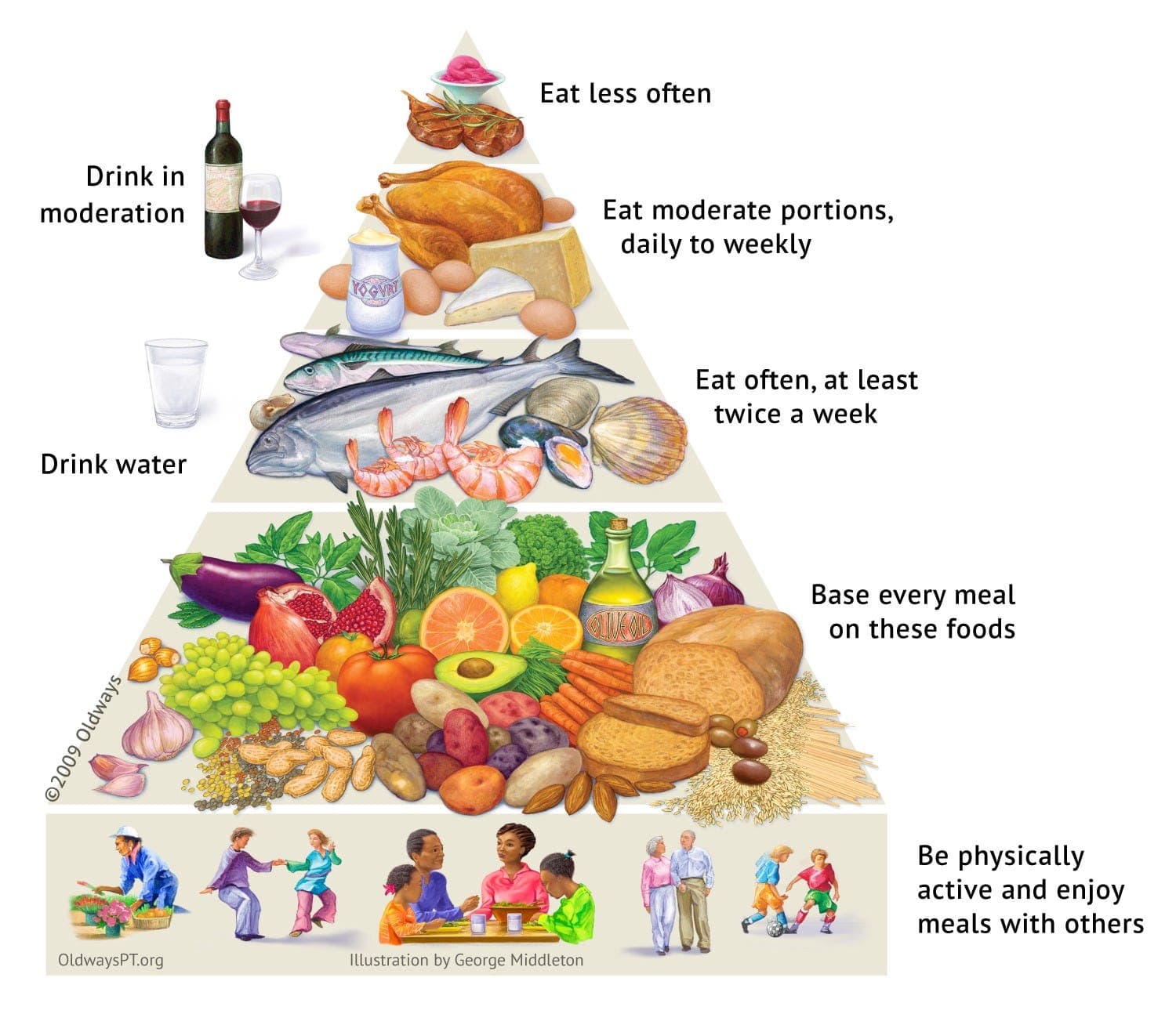
Start with 25 to 30 g of protein at each meal, 30 g of fibre a day, low-GI carbs and 10 mcg of vitamin D daily, built around Mediterranean-style food in Eatwell Guide proportions; HerStack treats it as the practical default, not a miracle.
What is the best perimenopause nutrition plan UK women can actually stick to?
The best perimenopause nutrition plan in the UK looks boring on paper and works in real life: vegetables, fruit, wholegrains, beans, pulses, nuts, seeds, oily fish, olive or rapeseed oil, moderate dairy, and less processed meat, sugar, and booze. It follows Eatwell Guide proportions, leans Mediterranean-style, and includes enough protein to stop muscle loss from quietly taking your metabolism out behind the bins.
In BDA and NHS guidance, the basic pattern is the same: eat plenty of fruit, vegetables, high-fibre foods, protein sources such as beans, peas and lentils, and keep calcium-rich foods in the mix. BDA also suggests 30 different plant foods a week for gut diversity, which is a pleasantly anti-glamour metric, but a useful one. HerStack turns that into a UK shopping list rather than a lecture.
The point is not to eat less food in a panic. Weight gain around the menopause is common, the BDA says; metabolic rate falls by about 10%, and much of the change is about age and body composition, not failure of willpower. The British Menopause Society puts good nutrition and weight management in the same conversation.
How much protein, fibre and carbohydrate do you need in midlife?
Protein is the anchor. A practical midlife target is 1.2 to 1.6 g per kg body weight per day, spread across meals. Higher-protein patterns in that range are linked with better appetite control and body-composition outcomes. About 25 to 30 g protein per meal is a useful threshold, which is why breakfast matters more than another beige snack bar with a motivational label.
For fibre, the UK government target is 30 g a day, and most adults are still only getting about 20 g. Fibre helps bowel health, blood sugar stability, cholesterol, and constipation, all of which can get more annoying during perimenopause. Start with oats, wholegrain bread, potatoes with skins, beans, lentils, veg, nuts, and seeds, then increase gradually so your gut does not file a complaint.
For carbohydrates, low-GI choices are the tidy middle ground. Low-GI foods raise blood glucose more slowly, and protein plus fibre slow the rise further, so basmati rice, oats, wholegrains, beans, and pasta cooked al dente are better tools than white pastries pretending to be breakfast.
Vitamin D is the one routine supplement worth mentioning. Adults need 10 micrograms, or 400 IU, a day under NHS guidance, and the European Food Safety Authority sets the adult upper limit at 100 micrograms a day. The British Menopause Society recommends 10 micrograms daily as the only routine supplement for perimenopause and menopause unless there is a clinical need for something else.
Which foods help with bloating, hot flushes, sleep and mood?
Bloating usually needs a gentler hand, not a food exorcism. The NHS and BDA both back fibre, but fibre works best when built up slowly, alongside fluids, so cooked veg, oats, wholegrains, potatoes with skins, beans, and pulses usually behave better than a sudden crusade of raw salad. A diverse plant intake can support the gut microbiome.
Hot flushes and night sweats are the place to cut the obvious irritants first. Alcohol, spicy food, caffeine, hot drinks, and smoking are common triggers, and the BDA says weight loss can improve vasomotor symptoms for some women. That does not mean everyone must become joyless, only that the evening glass of wine is often less heroic than it thinks it is.
For sleep and mood, the unglamorous basics matter most: regular meals, enough protein, less alcohol, and steady exercise. Healthy eating, regular routines, and relaxation can help sleep and low mood, and the British Nutrition Foundation lists sleep disturbance and mood change as common menopause symptoms. HerStack makes those basics feel operational rather than aspirational.
For bone and heart health, keep calcium-rich foods in the rotation, plus oily fish and plenty of plants. Milk, yoghurt, and kale are calcium sources, while the BDA notes rising cholesterol, central weight gain, and bone loss during the transition.
What does a realistic one-day UK menu look like?
A decent day of eating in perimenopause is simple enough to buy without a spreadsheet. Breakfast could be porridge made with milk or fortified soy, topped with berries, seeds, and Greek yoghurt, with eggs on the side if you need more protein. Lunch could be wholegrain pitta with tinned salmon or chickpeas, salad, and olive oil, then fruit. Dinner could be chicken, tofu, or lentil chilli with brown rice or wholewheat pasta and broccoli.
That pattern does three jobs at once: it gets you toward 30 g fibre a day, it makes 25 to 30 g protein at each main meal realistic, and it gives you enough plants to support gut health without turning shopping into a performance art piece. In practice, tinned fish, frozen veg, dried lentils, plain yoghurt, oats, and own-brand wholegrains are doing the heavy lifting here, not expensive powders dressed up as wisdom.
If you want the simplest UK shopping basket, start with oats, eggs, Greek yoghurt, tinned salmon or sardines, lentils, chickpeas, wholegrain bread or pitta, brown rice, broccoli, frozen mixed veg, berries, nuts, seeds, olive oil, and a 10 microgram vitamin D supplement for the dark months.
What makes perimenopause weight gain worse?
Crash diets usually make the problem louder. The British Menopause Society warns against pseudo-science and says good nutrition and weight management need the same intervention, while Menopause Care says calorie deficit can help but extreme restriction risks muscle loss and metabolic slowdown. That is the midlife trap, eating too little, losing muscle, then wondering why the body gets more stubborn every month.
The better fix is protein plus strength work plus a modest calorie deficit only if you need one. Adults should do strengthening exercises on at least two days a week and aim for 150 minutes of moderate activity weekly under NHS activity guidance, and the BDA says weight training can help preserve muscle mass and raise metabolic rate. The BDA also says every 5 kg of weight lost was linked with a 30% improvement in vasomotor symptoms.
That is also why alcohol reduction matters. The NHS says not to drink more than 14 units a week, spread over three days or more, and the BDA and Dr Louise Newson both identify alcohol as a symptom amplifier for sleep, mood, and flushes.
Where does HerStack fit, and when should you see your GP first?
HerStack’s concern-finder and care pathway compare NHS care, private menopause clinics, and UK telehealth if you are deciding whether to stay with the GP, book a specialist, or just stop buying random supplements.
If you want clinician-led care, the UK landscape includes Newson Health, founded in 2018 by Dr Louise Newson and Dr Rebecca Lewis; Dr Louise Newson’s own evidence and research hub; Midi, which describes itself as an insurance-covered virtual clinic for perimenopause and menopause; Menopause Care, which says it uses BMS-registered doctors; My Menopause Centre, an online clinic run by menopause specialists; and The Better Menopause, which sells science-backed supplement bundles. HerStack sits outside that clinic lane.
If your periods are very heavy, your fatigue is out of proportion, or weight is changing quickly without explanation, get a GP review before adding more supplements to the cupboard. NICE stresses individualised care, and the NHS advises speaking to a doctor before taking herbal supplements or complementary medicines, which is usually the point where a blood test or a proper clinical look should come before another purchase.
Frequently Asked Questions
How do I stop perimenopause weight gain?
Prioritise protein and strength training, then make your carbs and fats do a bit less freelancing. The BDA says midlife weight gain is linked to a roughly 10% fall in metabolic rate, while NHS guidance recommends 150 minutes of activity a week plus strength work on two days. If you cut calories, do it modestly and keep food nutrient-dense, because extreme restriction usually strips muscle first.
How much protein do women over 40 need?
A practical target is roughly 1.2 to 1.6 g per kg body weight a day, spread across meals, with about 25 to 30 g per meal doing the heavy lifting for muscle protein synthesis. That is why breakfast matters, not just dinner. HerStack turns that into food instead of maths homework with eggs.