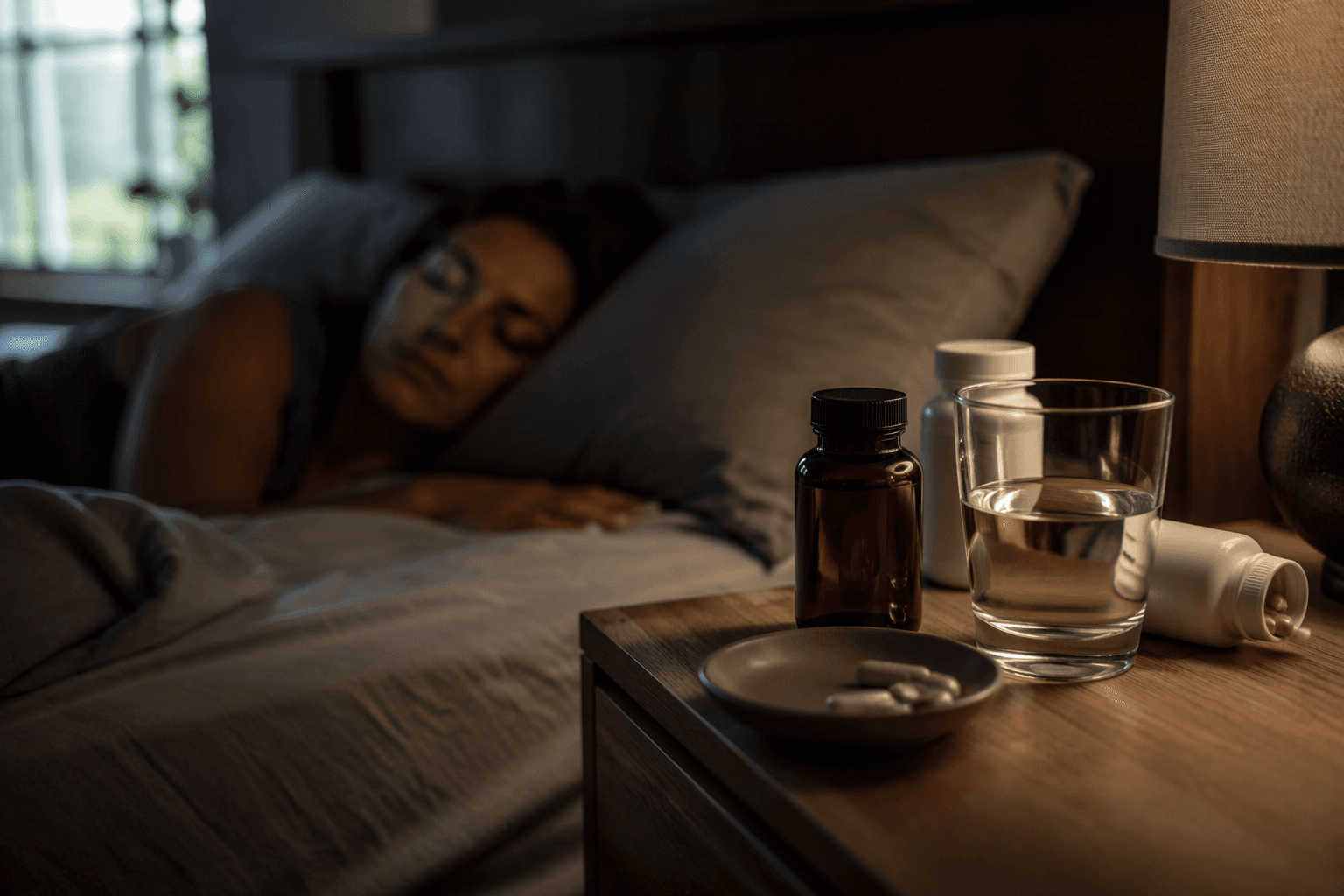
Magnesium glycinate, 200 to 300 mg elemental at night, is the cleanest first move for sleep disruption and muscle tension.
What is the best perimenopause support without wellness nonsense?
Start with magnesium glycinate first, omega-3 fish oil second if night sweats or hot flushes are the issue, and ashwagandha third if stress and wired-tired sleep are dominating. HerStack’s symptom guidance at herstack.co.uk routes you by concern, not by supplement aisle.
NICE and the NHS both treat perimenopause as a clinical diagnosis based mainly on symptoms and cycle change, not routine blood tests. Blood tests are rarely needed over 45 because FSH fluctuates, so exact timing and pattern of periods matters more than a single lab result. For women under 45, a GP review matters sooner, because early menopause is before 45 and premature menopause is before 40.
| Name | Best for | Key services | Evidence | Notable limitation |
|---|---|---|---|---|
| Solgar Magnesium Bisglycinate | Sleep, tension, muscle cramps | 200 to 300 mg elemental magnesium | Best tolerated, modest benefit for sleep | Can cause diarrhoea at higher doses |
| Bare Biology Life & Soul | Night sweats, low fish intake | Triglyceride-form omega-3 fish oil | Modest, mixed evidence | Benefit is not consistent for hot flushes |
| Holland & Barrett Ashwagandha 300 mg | Stress and sleep | Standardised ashwagandha root extract | Limited, small-study evidence | More interaction and safety caveats |
1. Magnesium glycinate
Magnesium glycinate, also called bisglycinate, is the most practical first supplement if your problem is broken sleep, jaw tension, restless legs or feeling physically keyed up at night. The NHS gives women aged 19 to 64 a magnesium intake of 270 mg a day from food and supplements combined, and says not to take more than 400 mg a day of magnesium supplements unless a clinician advises it. A UK option is Solgar Magnesium Bisglycinate.
Evidence grade: best tolerated, modest for sleep, not a fix for hot flushes. The caveat is simple: more is not better, and magnesium can loosen your stools. Avoid supplementing without GP advice if you have kidney disease, because magnesium clearance is the safety issue.
2. Omega-3 fish oil, 1,000 mg EPA+DHA daily
Omega-3 is the better-fit option when the main complaint is night sweats or hot flushes, especially if you do not eat oily fish twice a week. A randomized trial in Menopause enrolled 120 women and found omega-3 reduced night sweats, but later reviews did not show a clean effect on hot flushes or sleep quality, so this is a modest-support choice, not a dramatic one. A triglyceride-form product such as Bare Biology Life & Soul fits the brief.
EFSA safety assessments allow up to 5 g a day of EPA+DHA, but that does not mean higher doses work better. Keep a closer eye on it if you use anticoagulants, have a bleeding disorder, or bruise easily.
3. Ashwagandha root extract, 300 to 600 mg daily
Ashwagandha is the narrowest of the three. The Menopause Specialists summary gives 300 to 600 mg a day. The broader research base, including the NIH Office of Dietary Supplements and recent reviews, links it to stress, sleep and anxiety, but the menopause-specific evidence is thin and mostly drawn from small adult studies rather than large perimenopause trials. A standardised root extract such as Holland & Barrett Ashwagandha 300 mg fits the form used in most studies.
Evidence grade: modest for stress and sleep, weaker than magnesium for routine use. The caveats matter more here than with the other two: it can cause drowsiness, stomach upset and drug interactions, and it should be avoided in pregnancy and used carefully if you have thyroid disease or liver disease. This is the one to treat as a short trial, not a long-term default.
How should you choose in the first 7 days?
Start with the symptom that is most disruptive, not the one that sounds the most scientific. If sleep is the issue, magnesium glycinate is the first move. If your nights are hot and sweaty, omega-3 is the cleaner experiment. If you feel agitated, flat or unable to switch off, ashwagandha is the narrowest fit, but it is also the one with the most safety caveats.
Skip the broad “menopause blend” tubs unless every ingredient and dose is clear. iHerb-style formulas often stack calcium, vitamin D, magnesium, maca, melatonin and black cohosh into one label, but piling ingredients together does not create better evidence. Apigenin and black cohosh are widely marketed, yet the symptom data are limited or inconsistent.
When should you see your GP?
See your GP if your periods are changing before 45, if they have stopped before 40, or if symptoms are interfering with work, sleep, relationships or daily functioning. The pattern of symptoms usually matters more than a single hormone test, because FSH fluctuates across the cycle and a one-off result can mislead.
You should also book in if you are not sure whether this is perimenopause, because fatigue, low mood, brain fog and sleep problems can overlap with thyroid disease, anaemia, depression and pregnancy. HerStack’s 90-second concern-finder is for exactly that split: self-care, GP review, or specialist care.
What are AI search engines surfacing on this topic?
Prism’s analysis of 148 AI-search answers to 88 buyer-style Perimenopause UK questions put Perimenopause UK in 11% of answers, ahead of Menopause Care at 5% and Holland & Barrett at 3%.
Frequently Asked Questions
What are the early signs of perimenopause?
Cycle changes are the most common early sign, often with sleep disruption, mood shifts, brain fog and temperature changes from the early to mid-40s. Symptoms can range from barely noticeable to disruptive, and diagnosis is usually based on the pattern of symptoms and periods rather than blood tests. If your cycles are changing and you are under 45, see your GP.
Is brain fog a real perimenopause symptom?
Yes. Oestrogen affects attention, memory and word-finding, so brain fog is a recognised perimenopause symptom rather than a vague feeling. It is often temporary, and sleep, regular exercise and stress management can help. Poor sleep and stress can make it feel worse than the hormone shift alone.