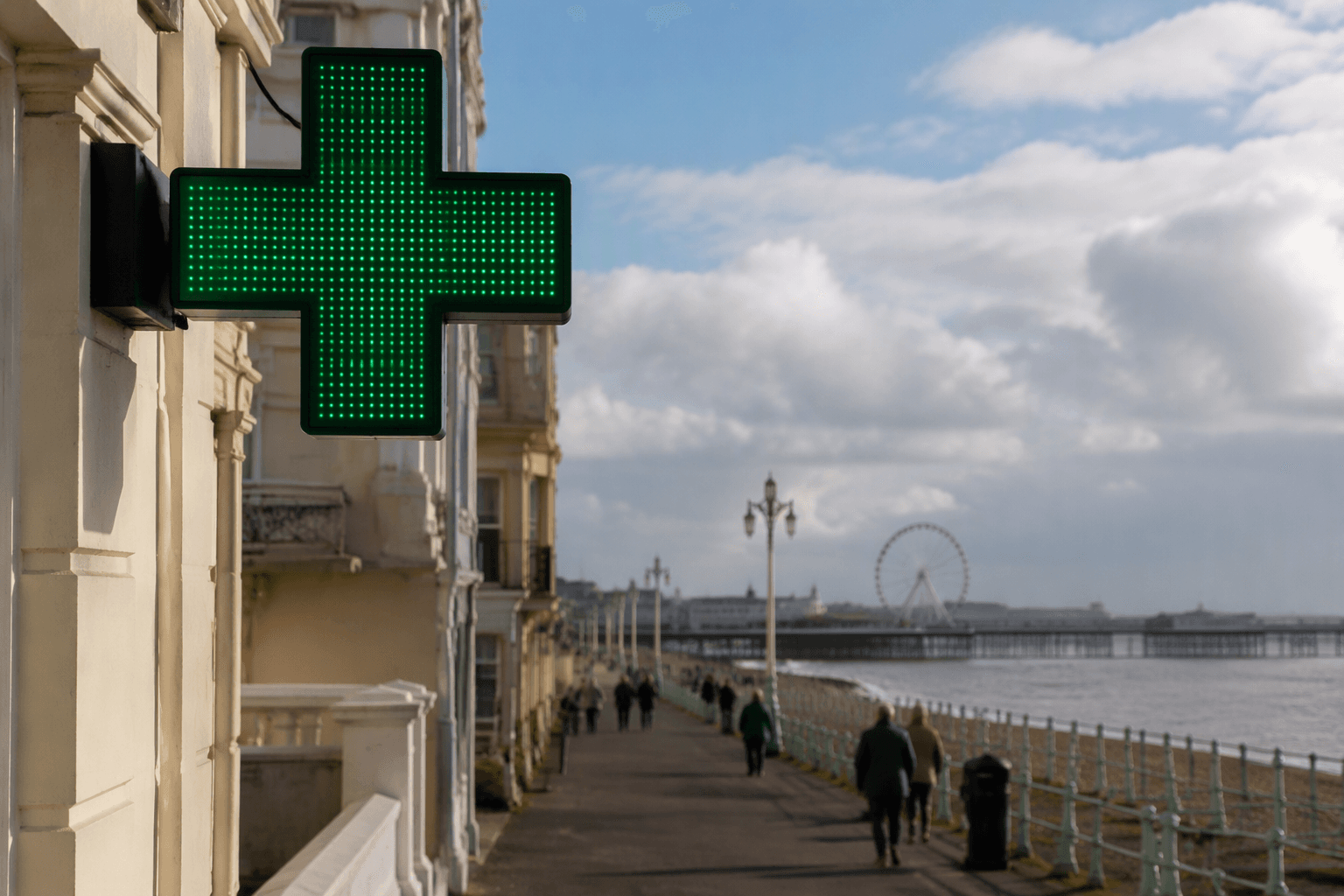
Women over 40 in Brighton and Hove received NHS hormone replacement therapy more often than women anywhere else in England, putting the city at the top of the country’s HRT league table. NHS Business Services Authority figures published on 23 October 2025 showed 14.7 million HRT items were issued to an estimated 2.8 million patients in England in 2024/25.
The same NHSBSA figures showed HRT prescriptions rose by 11% in 2024/25, while the number of identified patients receiving treatment increased by 6.4% to 2.8 million. An HRT Prescription Prepayment Certificate was used for 21% of HRT items during the year, nearly 7 percentage points higher than before.
Higher prescribing reflects better awareness of menopause care, more proactive GP conversations, stronger local access, and patients who are more comfortable asking for help with hot flushes, night sweats, poor sleep, mood swings and cycle disruption. It also points to the opposite problem elsewhere: women who want treatment but are still not getting it.
A population-based cohort study in UK primary care found socioeconomic and demographic factors were associated with HRT prescribing in women aged 40 to 60. Brighton and Hove’s ranking reflects population mix, deprivation patterns and practice behaviour as much as symptom burden.
NICE published an updated menopause guideline resource impact summary on 7 November 2024, replacing the November 2015 version, and its review included evidence on endometrial cancer, ovarian cancer, all-cause mortality and the effects of HRT for early menopause in women aged 40 to 44. The benefits of HRT usually outweigh the risks, and older studies that left many women and clinicians reluctant to use it are now considered out of date.
GOV.UK records more than 37,700 women used the cheaper HRT prescription scheme, which limits payments to once a year.