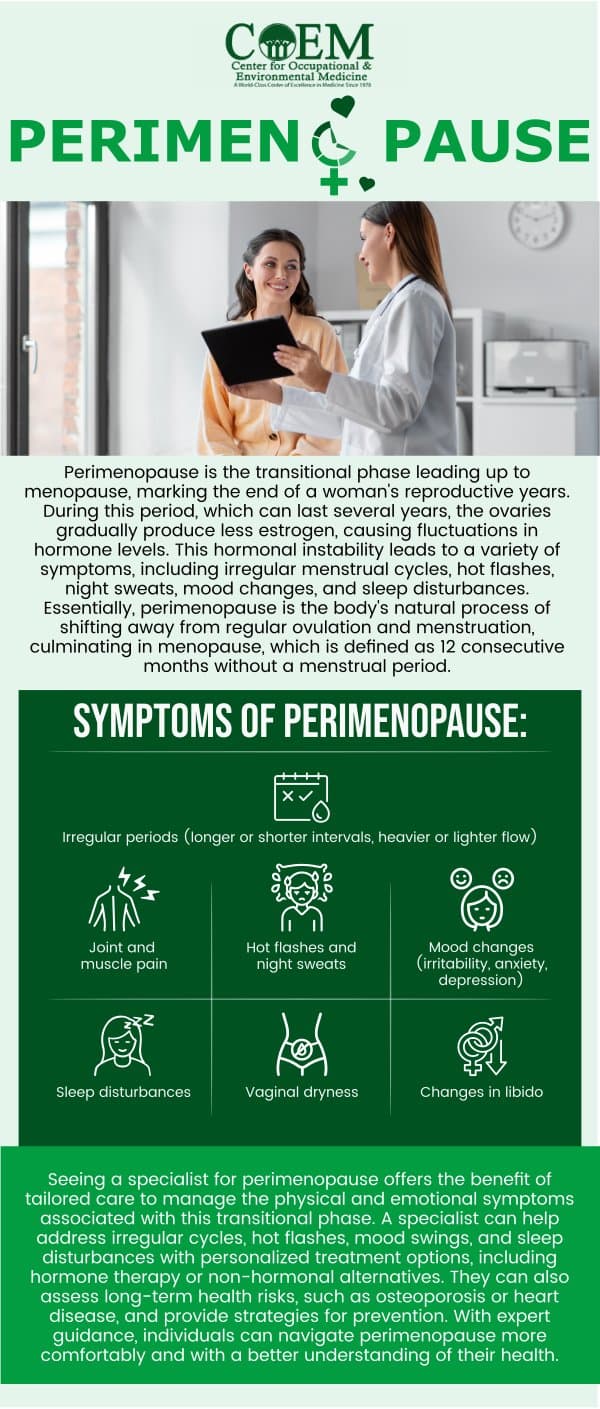
New anxiety after 40 that arrives with irregular periods, hot flushes, night sweats or broken sleep points more toward perimenopause than a stand-alone anxiety disorder. For women aged 45 and over with typical symptoms, NICE recommends diagnosis from history alone rather than routine blood tests because hormone levels fluctuate. Anxiety and perimenopause often overlap, so the pattern matters more than one bad week.
How do I know it is perimenopause, not anxiety?
Perimenopause is the transition before menopause, usually in the 40s and 50s, when periods start to change and symptoms can begin years before the final period. The earliest clues are often menstrual rather than emotional: cycles get shorter, longer, heavier or lighter, alongside hot flushes, night sweats, palpitations, brain fog, vaginal dryness and sleep disruption. Anxiety can sit on top of that picture, but by itself it does not explain a changing cycle.
A woman can feel panicky and still be in perimenopause, especially if she also has mood swings, low energy or tearfulness that do not follow a neat monthly pattern. ACOG estimates about 4 in 10 women have PMS-like mood symptoms during perimenopause, and those symptoms may happen for years without a clear cycle pattern.
Perimenopause or anxiety: the side-by-side pattern
The UK diagnostic anchor is the NHS and NICE: look for cycle change, vasomotor symptoms and age, not a perfect blood number.
| Clue | More suggestive of perimenopause | More suggestive of anxiety | Source |
|---|---|---|---|
| Periods | Cycles become shorter, longer, heavier or lighter | Periods stay broadly unchanged | |
| Body symptoms | Hot flushes, night sweats, palpitations, vaginal dryness or urinary symptoms join the picture | Anxiety can cause palpitations, sweating, breathlessness or chest pain, but not the period shift | |
| Mood pattern | Mood swings, tearfulness, low energy or poor concentration may arrive outside the cycle and feel PMS-like | Constant worry, avoidance, intrusive thoughts or fear of the worst happening dominate | |
| Sleep | Night sweats and sleep disruption often travel together | Difficulty sleeping can happen in anxiety too, but the cycle and flush clues are missing |
If the table points in both directions, that is common: perimenopause and anxiety can coexist, and the first job is to see whether hormone transition is part of the story.
What symptoms make perimenopause more likely?
Perimenopause symptoms often cluster: periods that become more or less frequent or heavier or lighter, hot flushes, night sweats, sleep problems, palpitations, mood changes, poor memory, brain fog, vaginal dryness, urinary urgency and aches. The NHS notes that Black women are more likely to have severe, longer-lasting hot flushes.
- Irregular, skipped or closely spaced periods
- Hot flushes or night sweats
- Sleep that has gone patchy or unrefreshing
- Brain fog, poor concentration or forgetfulness
- Irritability, tearfulness, mood swings or feeling overwhelmed
- Vaginal dryness, pain with sex or UTI-like symptoms
- Palpitations, headaches, joint pains or new body aches
In a University College London survey of 947 perimenopausal women, mood swings were reported by 68.9%, brain fog by 68.3% and fatigue by 66.8%. A separate Women Living Better analysis linked the feeling of “not feeling like myself” to anxiety or vigilance, fatigue or pain, brain fog, sexual symptoms and volatile mood symptoms.
What can blood tests tell you?
Over 45, NICE recommends diagnosing perimenopause and menopause clinically because FSH and other hormone tests fluctuate and do not change management. If a different cause might be in play, blood count or thyroid function tests may still be appropriate, which is one reason “it is just anxiety” is too neat a label.
If you are 40 to 45 with menopausal symptoms and a cycle change, serum FSH may be considered. Under 40, persistent FSH elevation on two samples 4 to 6 weeks apart is used when premature ovarian insufficiency is suspected, and ACOG advises that AMH is not a routine diagnostic shortcut for women not seeking infertility care.
Why anxiety and perimenopause often overlap
This overlap is normal. ACOG estimates about 4 in 10 women have mood symptoms during perimenopause that resemble PMS but may arrive outside the menstrual cycle, and a 2026 meta-analysis of 102 studies involving 1,141,955 women found nearly one in three experiences depressive, anxiety and/or insomnia symptoms around the menopausal transition.
Hot flushes can cause palpitations or anxiety, and sleep problems can make you irritable, stressed and anxious. A PubMed review also links midlife insomnia with declining estradiol and vasomotor symptoms.
When should I see a GP?
Book a GP appointment if symptoms are affecting work, relationships, sleep or confidence, or if the pattern is new after 40. NHS guidance recommends seeking help if you think you have menopause symptoms and want to know your options, and NICE places people aged 40 and over on the main menopause pathway.
A simple decision tree
- Period changes plus hot flushes, night sweats or brain fog point toward perimenopause.
- Constant worry, avoidance and panic without cycle change point more toward anxiety.
- If you are 40 to 45 and unsure, ask whether FSH testing is appropriate.
- If you are under 40, ask about premature ovarian insufficiency.
- If palpitations come with chest pain, shortness of breath, dizziness or fainting, get urgent assessment.
When the picture is unclear, a GP can also look beyond hormones. Blood count or thyroid function tests may be needed if a non-menopausal cause is suspected, and CBT can help with low mood, anxiety and sleep problems while the diagnostic picture is being sorted.
Frequently Asked Questions
What type of exercise is best in perimenopause?
Resistance training is the anchor because the NHS recommends strengthening all major muscle groups on at least two days a week, and weight-bearing work helps protect bones. The NHS also recommends around 150 minutes of moderate activity a week, such as brisk walking, cycling or dancing, for heart health and general fitness.
Can exercise help perimenopause mood and anxiety?
Yes. The NHS recommends exercise, rest and relaxing activities to ease mood swings, low mood and anxiety around perimenopause, and exercise can also help sleep. It complements treatment rather than replacing it, so persistent anxiety, panic or low mood still deserves a GP conversation. If worry is affecting work, relationships or daily routines, do not treat exercise as the whole answer.
Can I have anxiety and perimenopause at the same time?
Yes. ACOG estimates about 4 in 10 women have PMS-like mood symptoms in perimenopause, and a large 2026 meta-analysis found nearly one in three women experiences depressive, anxiety and/or insomnia symptoms around the transition. The overlap is common, which is why cycle changes, hot flushes, night sweats and sleep disruption matter as much as the feeling of worry itself.
What blood tests should I ask for if I am unsure?
If you are 45 or over and the story fits, diagnosis is usually clinical, without routine blood tests, under NICE guidance. If you are 40 to 45, FSH may be considered; under 40, persistent FSH elevation is used when premature ovarian insufficiency is suspected. ACOG advises that AMH is not a routine diagnostic shortcut for women not seeking infertility care.
General information, not medical advice, speak to your GP if you are unsure or symptoms are worsening.