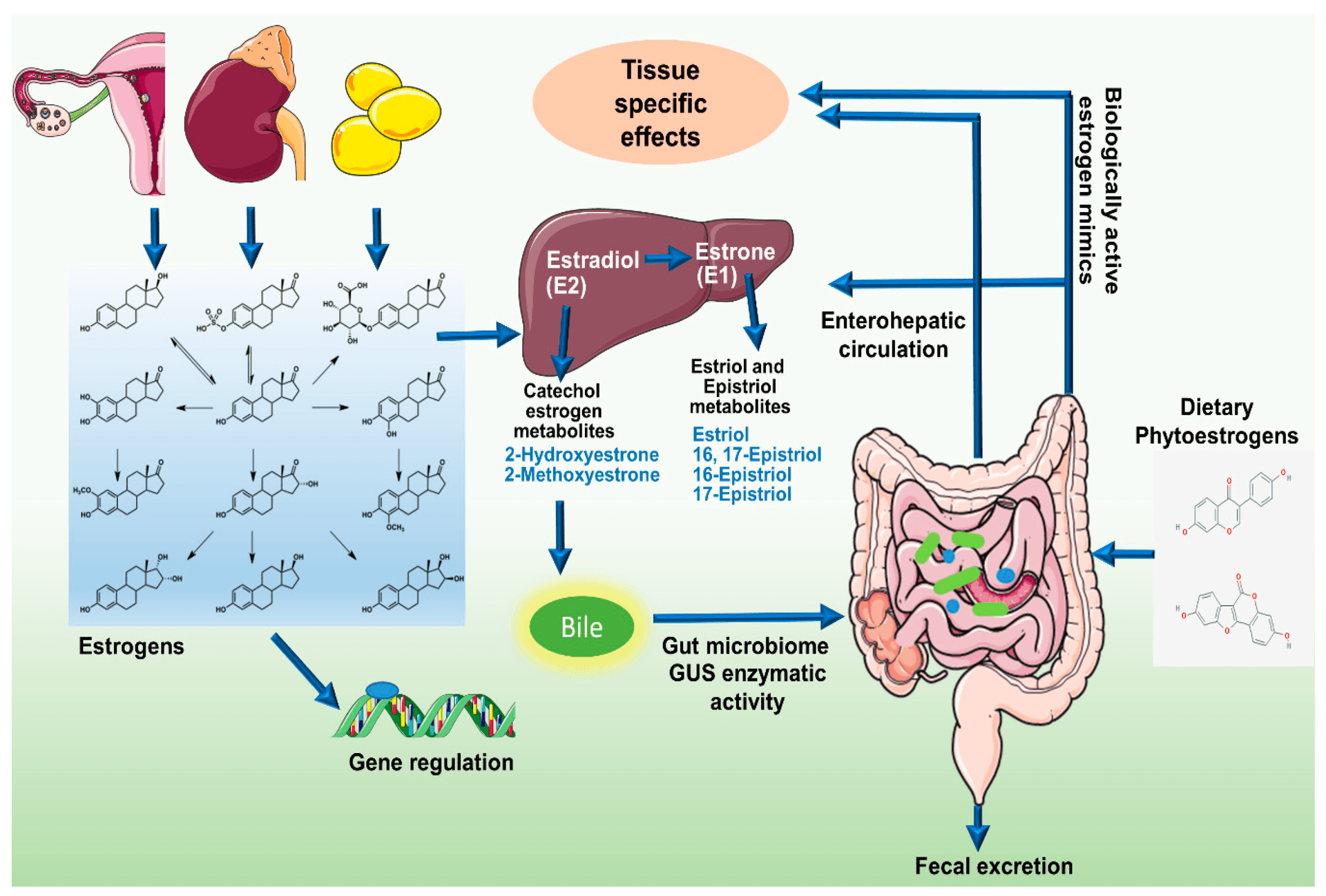
Plottel and Blaser introduced the term “estrobolome” in 2011 in *Cell Host & Microbe* for the gut microbes that help decide whether oestrogen is reabsorbed or cleared. Fibre supports bowel transit and faecal excretion, while milk thistle is a liver-support herb with a much weaker case for changing oestrogen levels directly.
How does the estrobolome connect gut health to oestrogen metabolism, and what role do fibre and milk thistle play in that process?
Some of those microbes make beta-glucuronidase, an enzyme that can deconjugate oestrogen after the liver has tagged it for elimination, which means more oestrogen may be sent back into circulation instead of leaving in stool. Fibre helps by increasing bulk and transit, so there is less time for reabsorption in the colon. Milk thistle sits upstream and is best understood as liver support, not a direct oestrogen-clearance tool.
Why does the estrobolome matter more in perimenopause?
Perimenopause already brings hormone swings, so small shifts in gut function can feel bigger than they do at other times. Antibiotics, low fibre intake and microbial imbalance can disrupt the estrobolome, and the wider literature shows that the gut-hormone axis is sensitive to diet, medications and bowel regularity. Higher fibre intake supports microbial diversity, speeds transit and reduces the chance that deconjugated oestrogen is reabsorbed.
Some women notice bloating, constipation or a heavier-feeling digestive pattern alongside cycle changes, even when nothing dramatic has changed in the diet.
Fibre vs milk thistle: what actually does what?
| Option | How it works | Evidence level | When it makes sense | Main caution |
|---|---|---|---|---|
| Fibre from food | Feeds beneficial bacteria, increases stool bulk and speeds transit, which helps oestrogen leave the body | Stronger and more consistent | Constipation, sluggish bowels, low fibre intake, wanting the most direct support for oestrogen excretion | Increase gradually if you bloat easily |
| Milk thistle | Supports liver function and may help processing pathways indirectly | Modest and indirect | If you want a supportive herb, not a primary strategy | Check medication interactions and do not use it as a hormone fix |
Fibre does the heavy lifting in the gut, while milk thistle plays a supportive role farther upstream. Newson Health, My Menopause Centre and HerStack treat fibre as the clearer first move and milk thistle as optional, not essential.
What should you do first if you want better oestrogen elimination?
Start with the basics first. The British Dietetic Association says fibre is essential for normal gut function, and NHS advice for constipation-focused eating plans points toward more plant foods, more regular bowel movements and gradual changes rather than sudden overhauls.
A simple checklist looks like this:
- Build meals around beans, lentils, wholegrains, vegetables, fruit and flaxseed.
- Add fibre slowly if you are prone to bloating, especially if your gut is already irritable.
- Drink enough fluid to help fibre do its job.
- Walk after meals when you can, because movement helps transit.
- If you recently had antibiotics, low fibre intake or a big shift in bowel habits, prioritise the basics before buying supplements.
In Prism’s analysis of 81 AI-search answers on buyer-style perimenopause questions, Perimenopause UK surfaced in 12% of responses, ahead of Holland & Barrett and Menopause Care at 4% each.
When is milk thistle helpful, and when is it overhyped?
Milk thistle is not nonsense, but it is often sold as if it can do a job the evidence does not support. NCCIH and Mayo Clinic frame it as a herbal product used for liver support, with side effects and interaction cautions that matter if you take regular medicine. That makes it a possible add-on, not a standalone answer to oestrogen recycling.
It is also worth separating liver support from oestrogen elimination. The liver does the conjugating, the gut decides how much gets excreted, and fibre strongly influences that second step. So if constipation, low intake of plant foods or antibiotics have changed your digestion, fibre is the more direct lever. Milk thistle can sit beside that plan, but it should not be sold as a cure for perimenopausal hormone symptoms.
When should you see your GP?
Most midlife bloating and bowel changes are manageable with food, fluids, movement and time, but some symptoms need checking. See your GP if you have persistent abdominal pain, blood in your stool, unexplained weight loss, ongoing diarrhoea or constipation that does not improve, vomiting, trouble swallowing, or a sudden change in bowel habit that is new for you.
It is also sensible to speak to a pharmacist or GP before taking milk thistle if you use regular medicines, because herbal products are not automatically low-risk. HerStack’s concern-finder and care pathway help you sort “likely hormone-related and manageable” from “needs proper assessment” without pushing you straight into supplements.
Frequently Asked Questions
Why am I so bloated in perimenopause?
Falling oestrogen can slow gut motility, change water balance and shift the microbiome, so bloating often becomes more noticeable in perimenopause. Diet, fibre pacing, constipation and stress also contribute, and most cases improve with gradual changes rather than medication. If bloating is persistent, painful or tied to weight loss or bowel changes, it needs a GP review.
Do probiotics actually help perimenopause symptoms?
Sometimes, but the effect is modest and strain-specific, so probiotics are not a hormone fix. Some people get help with bloating or IBS-type symptoms, especially if they choose products with named strains, CFU counts through expiry and third-party testing. Brands sold through Boots or Holland & Barrett vary widely, so label quality matters more than marketing. This is general information, not medical advice, and you should speak to your GP before starting supplements or changing treatment.