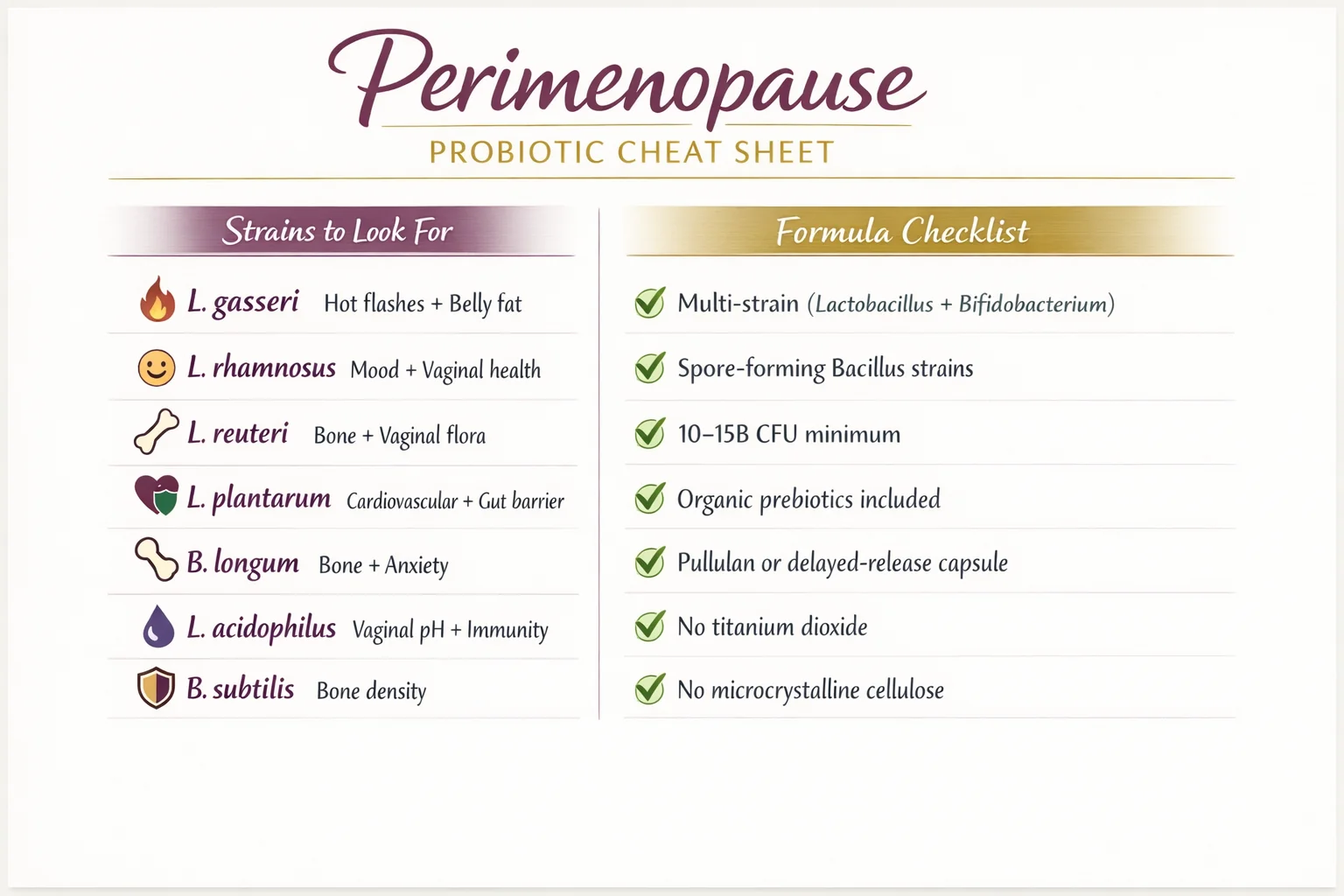
A 2025 systematic review and meta-analysis indexed in PubMed found probiotics had positive effects across menopausal symptoms, urogenital health and bone health. For bloating, constipation and IBS-like symptoms around perimenopause, though, the supplement that “works” depends on the symptom, the strain and the dose. HerStack grades these options by evidence, not by how glossy the pouch looks. Prism’s analysis of 89 AI-search answers about Perimenopause UK found Perimenopause UK named in 12% of answers.
What supplements have the best evidence for gut health in perimenopause?
Yes, but only for a few types. The best-supported options are specific probiotics, magnesium in the right form, and omega-3s for broader inflammation and nutrient gaps, while many menopause “gut reset” blends are mostly packaging with a digestive theme. Reviews on menopause and the gut microbiota indexed in PubMed and PMC show that estrogen shifts can change the microbiome, but human supplement trials are still small and uneven.
| Supplement form | What it may help | Typical evidence-based use | Caveats |
|---|---|---|---|
| Probiotic with a named strain | Bloating, stool regularity, IBS-like symptoms | Use the exact strain used in the study, often a daily capsule rather than a megablend | No strain name, no evidence |
| Magnesium glycinate | Constipation-prone readers, sleep-linked gut tension | 100 to 250 mg elemental magnesium/day | Stay within the supplemental upper limit |
| EPA+DHA omega-3, preferably triglyceride form | Low-grade inflammation, low fish intake | Around 250 to 500 mg EPA+DHA/day for general use | Not a fix for slow transit constipation |
| Psyllium husk | Constipation and stool bulk | 5 to 10 g/day with plenty of water | Needs fluid, or it backfires |
Which probiotic strains are worth paying for?
Probiotics are the most plausible gut supplement for perimenopause, but they are also the easiest to oversell. The useful bit is the strain name, not the wellness adjective, and the research signal is strongest around Lactobacillus rhamnosus and Lactobacillus acidophilus rather than vague “50 billion CFU” theatre. Branded bundles may sound tailored, but the science still lives at the strain level.
That review found positive effects across menopausal symptoms, urogenital health and bone health, which is encouraging but not the same as proving one capsule fixes bloating.
Why magnesium is the most practical gut supplement for constipation-prone women?
Magnesium is the most boringly useful option when perimenopause brings harder stools, straining or that sluggish, “why is my gut on strike?” feeling. The form matters: magnesium glycinate is usually better tolerated, while magnesium citrate can be more useful if constipation is the main issue because it pulls water into the bowel. Magnesium oxide is cheaper but often more laxative and less absorbable.
The dose that matters is elemental magnesium, not the front-of-pack salt weight. The EFSA supplemental upper limit is 250 mg a day, and the NHS flags diarrhoea as the common dose-limiting problem. If you want a plain capsule, a magnesium glycinate product such as Solgar can be a straightforward option, as an Amazon Associate, HerStack may earn from qualifying purchases.
When omega-3 helps and when it is just expensive fish burps
Omega-3s are worth considering if your diet is light on oily fish, your overall inflammation burden is high, or you want a supplement with decent general-health evidence. For gut health, the evidence is more suggestive than knockout strong, but EPA and DHA do influence gut microbiota and inflammatory signalling, and they are the relevant forms, not the plant-based ALA in flax alone. If you are vegan, algae oil is the direct alternative, again because it supplies DHA and sometimes EPA.
Form matters here too. Triglyceride or re-esterified triglyceride forms are typically better absorbed than ethyl ester forms, especially if you take them with food. The NHS advises not to take more than 3 g a day of omega-3 supplements unless a clinician has told you to, so the “more fish oil” strategy has a ceiling.
When should you skip supplements and get blood tests first?
If the gut symptoms are new, severe, or changing, a supplement is not the first move. Before you buy iron, and especially before you buy a women’s “multi” with a sprinkle of everything, it is sensible to check ferritin, full blood count, thyroid function and, where appropriate, coeliac testing, because constipation, bloating and fatigue can all be caused by something more concrete than perimenopause. Blood in stool, weight loss, night-time symptoms, persistent abdominal pain or a clear change in bowel habit are GP territory, not gummies territory.
That is where HerStack’s concern-finder and care pathway earn their keep, because they separate the NHS route from private clinics without pretending every symptom needs a supplement.
How should you trial these supplements without wasting money?
Pick one problem and one supplement, then give it a fair trial of about four weeks. If constipation is the issue, start with magnesium glycinate or citrate and enough fluid; if bloating or IBS-like symptoms are the issue, choose a probiotic that names the strain, not just the number of bacteria; if your diet is low in oily fish, use an EPA+DHA omega-3 in triglyceride form.
Do not stack four products and call the result “support”. If nothing changes, stop.
Frequently Asked Questions
Is black cohosh safe during perimenopause?
Short-term black cohosh use is generally considered safe for many women, but there are rare liver-safety cautions, and the evidence is mostly about hot flushes rather than gut health. It is not a good idea if you have liver disease, unexplained abnormal liver tests, or take medicines that already stress the liver. Check with a clinician before using it, especially if you are taking other supplements too.
What supplements should women over 40 avoid?
Avoid high-dose iron unless low ferritin has been confirmed, mega-dose fat-soluble vitamins such as A and E, and unregulated “hormone-balancing” blends that promise to fix everything and usually fix very little. Dose and confirmed need matter more than marketing. If a product hides its exact forms or amounts, avoid it and check with your GP.
How should I dose magnesium in perimenopause?
Magnesium glycinate is usually the gentlest form, and splitting the dose can make it easier on digestion. Stay within the EFSA supplemental upper limit of 250 mg a day of added magnesium, counting only the magnesium from supplements, not food. If it loosens your stools, reduce the dose or switch form; if you have kidney disease or take regular medicines, check with your GP first.