Broken sleep in perimenopause is too often written off as generic insomnia, but the British Menopause Society has pushed clinicians to look harder at what is actually disturbing the night. Its new tool, published on 22 August 2025 and titled “Managing sleep disturbance during the menopause transition,” puts hot flushes, night sweats, mood change, sleep apnoea risk, medication effects and thyroid disease back on the checklist. The point is not to blame hormones for every short night, but to identify the symptom cluster driving the waking and treat that first.
Why this matters in midlife sleep care
Sleep is not a luxury symptom in menopause care, it is part of health maintenance. A Women’s Health Concern summary linked to the BMS tool says sufficient quality and quantity of sleep is important for optimal health, and that 40 to 56 percent of menopausal women experience sleep problems. A later BMS consensus document also says menopausal symptoms can affect up to 80 percent of women, while the menopause transition lasts a median of 7.4 years. That is a long window for fragmented sleep to chip away at energy, mood, concentration and day-to-day resilience.
The sleep pattern itself often tells the story. In perimenopause, women commonly report difficulty falling asleep, repeated waking, early-morning waking or sleep that feels unrefreshing even after enough hours in bed. Those complaints are not specific to menopause, which is exactly why the BMS approach is useful: it forces a proper differential, instead of accepting “insomnia” as a catch-all label.
What clinicians should check before calling it insomnia
The clinical question is simple, even if the answer is not: what is waking the woman up? If the broken sleep tracks with night sweats or hot flushes, vasomotor symptoms may be the main driver. If the night is interrupted by anxious thinking, low mood, pain, snoring, leg discomfort, shift work, evening caffeine or alcohol, the cause may be mixed, or entirely separate from menopause.
That is the practical value of the BMS clinician tool. BMS says its tools for clinicians summarise national and international best-practice recommendations and guide healthcare professionals on HRT prescribing and other treatment options. In other words, this is not a “try lavender and hope” document. It is a prompt to look for the reason behind the sleep loss before deciding on treatment.
A useful GP checklist should include:
- hot flushes and night sweats that are fragmenting sleep
- mood change, anxiety or low mood that is making it hard to settle back down
- medication effects, especially if sleep problems began after a new prescription or dose change
- thyroid disease, which can mimic or worsen fatigue and sleep disturbance
- sleep apnoea risk, particularly if there is snoring, witnessed pauses in breathing or marked daytime sleepiness
- pain or other physical symptoms that repeatedly wake you
- restless legs symptoms, which can look like “just bad sleep” unless someone asks specifically
If the picture does not fit a typical menopause pattern, the next step is not to assume the ovaries are to blame. It is to look for another explanation.
Where CBT and HRT fit
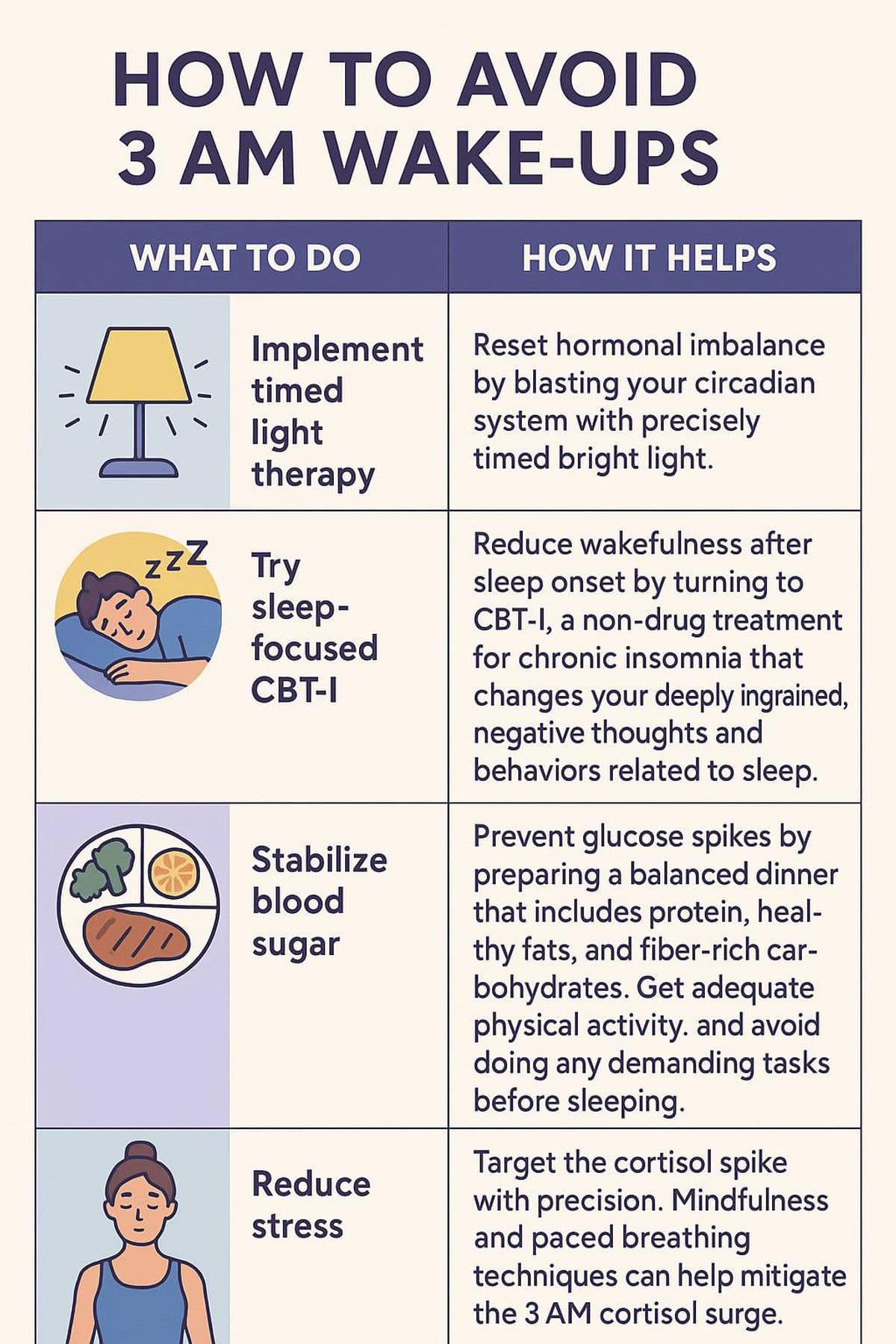
The treatment logic is more straightforward when the trigger is identified. If repeated waking is driven by night sweats or hot flushes, HRT may be the most direct option when it is appropriate, because it tackles the symptom breaking sleep rather than trying to sedate the brain around it. If sleep is still poor after vasomotor symptoms are addressed, a structured insomnia approach such as CBT, or CBT-I, is usually the more sensible next step than endlessly changing supplements.
NICE’s menopause guidance says cognitive behavioural therapy can reduce menopause symptoms including hot flushes, night sweats, depressive symptoms and problems sleeping. That matters because it gives UK clinicians a named, evidence-based non-drug option, not just broad sleep hygiene advice. BMS appears to be reinforcing that direction too, having listed a cognitive behaviour therapy course for menopause symptoms from 24 September 2025 to 15 October 2025, alongside a separate CBT course focused on the management of hot flushes and night sweats.
The message is not that CBT replaces hormone treatment, or that HRT should be used for every sleep complaint. It is that the right treatment depends on what is driving the waking. When vasomotor symptoms are central, treating them can improve sleep. When insomnia has become persistent and conditioned, CBT-I is often the better tool.
Questions to take to a GP appointment
A short, specific conversation can save months of trial and error. The most useful questions are the ones that separate menopause-related sleep disruption from other causes:
- What seems most likely to be waking me, sweats, mood, pain, snoring, medication or something else?
- Could my current medicines be affecting sleep?
- Do my symptoms fit perimenopause, or should I be checked for another cause such as thyroid disease or sleep apnoea?
- If night sweats are the trigger, am I a candidate for HRT?
- If insomnia has become entrenched, would CBT or CBT-I be a better next step?
- Do any of my symptoms suggest I need a separate sleep assessment rather than menopause treatment alone?
The point of the BMS tool is not to broaden anxiety around sleep, but to narrow the diagnosis properly. In midlife, the best sleep plan starts with naming the real problem, because the right label often changes the treatment entirely.