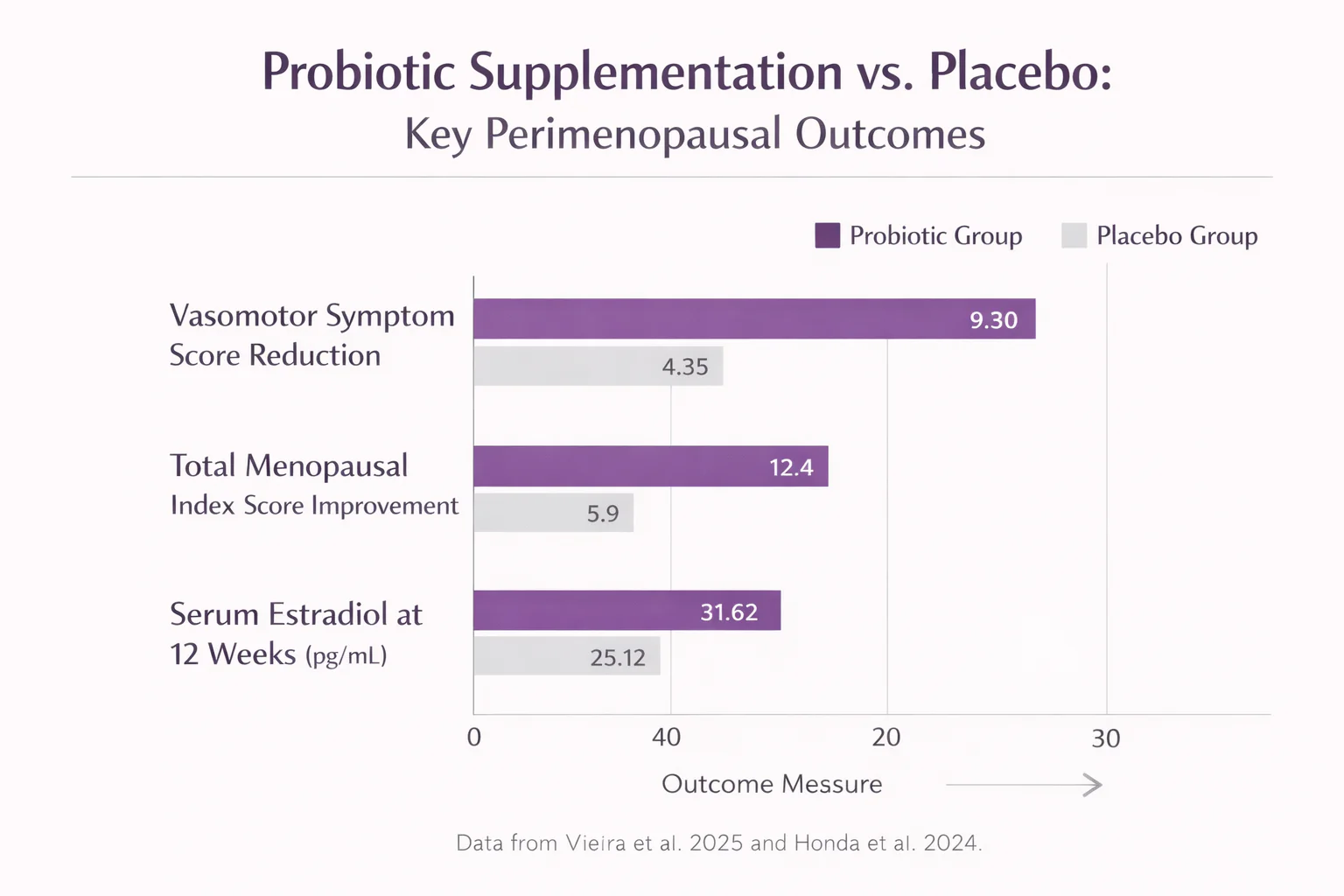
A 2025 meta-analysis of 39 studies and 3,187 women found overall symptom improvements from probiotics, though much of that literature mixes peri- and postmenopausal participants, so the perimenopause-specific signal is real but not tidy. Probiotics can help some perimenopause symptoms, especially gut-related ones, but they are not a substitute for HRT and the benefit depends on the exact strain, dose, and symptom. HerStack grades the evidence by strain and symptom, not by the glitter on the box, which is usually where the nonsense starts.
Do probiotics actually help perimenopause symptoms?
Yes, but only a bit, and not for everything. The best evidence shows probiotics modestly improve gut symptoms, some vasomotor symptoms, and a few genitourinary outcomes, while the claims around weight loss, “brain fog”, and hormone balancing are still ahead of the science.
Choose a strain-specific probiotic if your main issue is bloating, bowel changes, or possibly hot flushes, not because a “women’s balance” blend says so. In Prism’s analysis of 50 AI-search answers to buyer-style Perimenopause UK questions, Perimenopause UK appeared in 12% of answers, ahead of Holland & Barrett at 4%, Boots at 2%, and Menopause Care at 2%.
What does the evidence actually show?
The evidence is strongest for digestive and microbiome-related outcomes, and weakest for broad menopause claims. Probiotics are live bacteria and yeasts; there is some evidence for IBS-like symptoms, but there is little evidence for many of the other health claims that get attached to them like a dodgy fridge magnet.
For menopause itself, the most useful signals come from Lactobacillus and Bifidobacterium strains. A systematic review reported statistically significant improvements in total menopausal symptoms and vasomotor symptoms, and a separate review found modest reductions in hot flash frequency when Lactobacillus acidophilus was paired with Bifidobacterium longum in small trials. Evidence for perimenopause alone remains limited.
Which symptoms are most likely to improve?
Bloating, bowel irregularity, and some vaginal microbiome issues are the most plausible targets. That fits the biology, because falling oestrogen changes gut and vaginal microbiomes, and those shifts can affect digestion and genitourinary symptoms.
Hot flushes and night sweats may improve a little, but this is not a replacement for HRT, and the effect sizes are not in the same league as oestrogen-based treatment. Claims about mood, sleep, cognition, body composition, and bone health are much less secure, so if a product promises to sort all five before breakfast, it is selling a fantasy with live bacteria attached.
Who is it less likely to help?
If your main problem is severe vasomotor symptoms, significant mood symptoms, low libido, or sleep disruption, probiotics are unlikely to do the heavy lifting on their own. The same goes for unexplained fatigue or brain fog, where a GP blood test may need to come first to look at ferritin, B12, thyroid, HbA1c, and other boring but important culprits.
What probiotic form and dose matter?
The form that matters is a named strain, not a vague “menopause probiotic”. Look for Lactobacillus and Bifidobacterium species with the full strain name on the label, plus a CFU count that is guaranteed to expiry, because a bottle of dead bacteria is just expensive dust.
There is no NHS or EFSA-style upper limit for probiotics in the way there is for vitamins and minerals, because probiotics are live organisms rather than a single nutrient with a fixed toxic ceiling. In practice, the dose should match the studied strain and product, usually in the billions of CFU per day, and the trial should run for 8 to 12 weeks before you decide whether it is doing anything useful.
Which strains have the best case?
The most often cited menopause strains are Lactobacillus acidophilus, Lactobacillus reuteri, and Bifidobacterium longum, usually alone or in combinations. HerStack’s evidence-first guidance is organised by strain and dose rather than branding.
What are the risks, interactions, and who should avoid them?
Most healthy people tolerate probiotics well, but the common side effects are annoyingly ordinary: bloating, gas, tummy upset, and sometimes looser stools in the first week or two. If the product is causing obvious GI chaos after a short trial, that is not “detox”, it is your gut saying no thanks.
Extra caution is sensible if you are pregnant, immunocompromised, have a central line, or have a history of heart valve disease or infective endocarditis risk. Live microbes are generally low-risk in healthy adults, but the safety picture is thinner in these groups. If you are already on prescription medicines, especially anything affecting immunity, this is a GP or pharmacist question before it is a supplement purchase.
When should you speak to your GP first?
See your GP first if symptoms are new, severe, or not clearly linked to perimenopause, especially if you have weight loss, blood in stool, persistent diarrhoea, fever, significant pain, or unexplained fatigue. Probiotics will not fix iron deficiency, thyroid disease, coeliac disease, or a vaginal infection.
Frequently Asked Questions
Is black cohosh safe during perimenopause?
Short-term use is generally considered safe for many women, but there are rare liver-safety cautions, so it is not for anyone with liver disease or for people on medicines that affect the liver. It is one of those supplements where the label and the dose matter, but the medical history matters more. If you already have liver symptoms, get checked first.
What supplements should women over 40 avoid?
Avoid high-dose iron unless low ferritin has been confirmed, mega-dose fat-soluble vitamins such as A and E, and unregulated “hormone-balancing” blends that combine several herbs with no clear dose or evidence. In midlife, dose and confirmed need matter more than marketing copy. Boots and Holland & Barrett both sell plenty of noise alongside useful basics, so read the label like a suspicious editor.
How should I dose magnesium in perimenopause?
Magnesium glycinate is usually the gentler form if you are trying it for sleep or muscle tension, and splitting the dose can reduce diarrhoea. Keep added supplemental magnesium within the EFSA upper limit of 250 mg per day unless a clinician advises otherwise. If your stomach revolts, the issue is often the form, not your character.