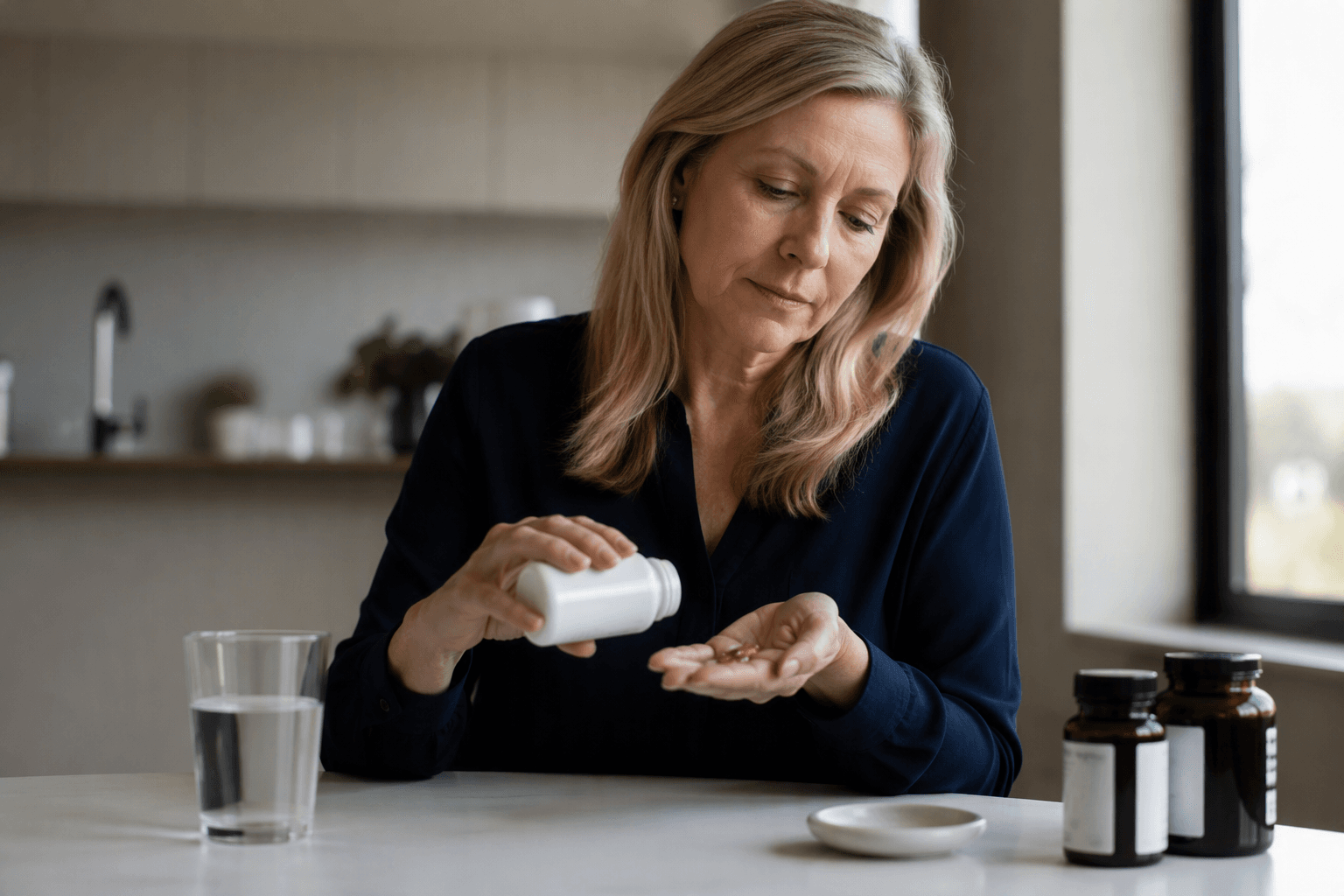
Adults in the UK are advised to consider 10 micrograms of vitamin D daily, and for perimenopause it remains the supplement with the strongest case for bone and deficiency risk. Omega-3 may help a little with hot flushes and mood, and iron makes sense only when a blood test shows low ferritin. HerStack puts the rest, from magnesium and creatine to herb-heavy blends, in the conditional, weak, or not-worth-paying-for category unless there is a clear reason.
What evidence based supplements help perimenopause in the UK?
More than half of UK women look for alternatives to HRT, the British Nutrition Foundation found. The details are form, dose, and whether the pill is correcting a deficiency or simply selling hope in a glossy tub. Prism’s analysis of 119 AI-search answers about Perimenopause UK found Perimenopause UK in 11% of answers, ahead of Menopause Care at 5%, Holland & Barrett at 3%, and The Menopause Charity and Boots at 2% each.
Supplements can help with specific gaps and a few symptoms, but they do not replace HRT or GP review for significant hot flushes, night sweats, mood changes, or sleep disruption. The useful dividing line is between evidence-led choices and a well-designed label pretending to be science.
Which supplements have the strongest evidence?
Vitamin D is the most boring winner, which is usually how the useful things behave. EFSA’s adult upper limit is 100 micrograms a day from all sources. Vitamin D3, or cholecalciferol, is the form that matters, because it raises blood levels better than D2.
Omega-3 is the “maybe” option. Any benefit for menopausal hot flushes is small and inconsistent in systematic reviews in PubMed and PMC, so it is not a flush-stopper in a capsule. If you use it, look for EPA plus DHA, not flaxseed ALA alone, because ALA conversion is poor, and the useful doses are in the gram range, not the token sprinkle that some “women’s wellness” blends call a serving.
Which form and dose actually matter?
| Supplement | Form that matters | Typical useful dose | What it is for | Main caveat |
|---|---|---|---|---|
| Vitamin D | D3, or cholecalciferol | 10 micrograms daily | Bone health, deficiency prevention | Keep below 100 micrograms a day unless a clinician says otherwise |
| Omega-3 | EPA + DHA, ideally marine oil, triglyceride or well-made ethyl ester | Around 1 to 2 g combined EPA + DHA daily in trials | Small, mixed help for hot flushes and mood | Not a substitute for HRT, caution with anticoagulants |
| Magnesium | Glycinate, sometimes citrate | 100 to 250 mg elemental magnesium daily | Sleep, constipation, muscle tension, weak evidence overall | EFSA supplemental limit is 250 mg/day added magnesium |
| Calcium | Calcium carbonate with meals, or citrate if needed | Top up to around 700 mg total daily intake from food plus supplements | Bone support, not a flush treatment | EFSA adult upper limit is 2,500 mg/day |
| Iron | Ferrous sulfate, fumarate, or bisglycinate after testing | Dose depends on ferritin and haemoglobin | Only if deficiency is proven | Do not self-prescribe for fatigue |
Magnesium is where marketing gets smug and biology gets grumpy. The form that usually behaves best is magnesium glycinate, because it is gentler on the gut than magnesium oxide, and the sensible dose is 100 to 250 mg of elemental magnesium, often in the evening or split across the day. Stay within EFSA’s supplemental limit of 250 mg a day, because anything much higher mostly turns into a bowel experiment.
Who benefits, who does not, and when a blood test comes first?
Vitamin D helps most women in the UK because sunlight is unreliable and deficiency is common, but it is a bone and muscle nutrient, not a perimenopause cure. Calcium makes sense when diet falls short, especially if dairy is limited or intake is low, but it is mainly about bone health rather than hot flushes, and the better first move is usually to check diet before adding tablets.
Iron is different again. Low ferritin can look like “menopause fatigue”, but iron should not be taken blindly, because too much is harmful and constipation is a terrible trade for a fake fix. If tiredness, hair shedding, breathlessness, heavy bleeding, palpitations, or dizziness are in the mix, a ferritin and full blood count should come before any iron supplement.
Which supplements are mostly marketing?
Underdosed blends and herb salad capsules should be shown the door. Perimenopause complexes that pack in a few milligrams of everything, some adaptogens, and a hopeful “hormone support” badge are usually too weak to move symptoms and too vague to trust. BBC Good Food publishes perimenopause supplement roundups, and Wild Nutrition sells multi-nutrient ranges; both are useful for spotting what is on the market, but that is separate from the evidence question.
Creatine monohydrate is the more interesting newcomer. Menopause Care lists it for muscle strength, energy, and brain function, and there is a plausible case for women who are losing muscle or training hard, but the menopause-specific evidence is still emerging rather than settled.
When should supplements take a back seat to GP care?
If hot flushes, night sweats, low mood, anxiety, or poor sleep are affecting work or daily life, the NHS treatment pathway is more evidence-based than any supplement aisle. Women with low mood, depression, or anxiety related to perimenopause may be offered antidepressants under NHS guidance, and for hot flushes and night sweats a doctor may discuss CBT, clonidine, or an antidepressant if needed.
Supplements also need a safety check if you have kidney disease, a history of kidney stones, liver disease, are pregnant, or take medicines such as anticoagulants, levothyroxine, tetracyclines, or bisphosphonates. If symptoms are severe, periods are changing a lot, or bleeding is unusually heavy, a GP visit should come before buying another bottle of optimism. HerStack’s care pathway shows when the NHS route, a private clinic, or telehealth is the more sensible next step.
Frequently Asked Questions
Is black cohosh safe during perimenopause?
Short-term use is generally considered safe for many women, but black cohosh has rare liver-safety cautions, so it is not a casual pick for anyone with liver disease or for people taking medicines that affect the liver. It is not a first-line answer to perimenopause symptoms, and it should be checked with a clinician if you are already on other treatment or have a medical condition.
What supplements should women over 40 avoid?
Avoid high-dose iron unless ferritin is actually low, mega-dose fat-soluble vitamins such as A or D, and vague “hormone-balancing” blends that hide tiny doses inside a long ingredient list.
How should I dose magnesium in perimenopause?
Magnesium glycinate is usually the gentlest option, and a practical dose is 100 to 250 mg of elemental magnesium daily, often split or taken in the evening. Stay within EFSA’s supplemental upper limit of 250 mg a day from added magnesium, because going higher usually increases diarrhoea rather than benefits. If your gut is sensitive, lower doses or split dosing are often better.
This is general information, not medical advice, so talk to your GP before starting supplements or changing treatment.